Alpha Lipoic Acid and Candida: Does It Actually Help?
If you have searched for alpha lipoic acid and Candida, you may have come across claims that this antioxidant can kill yeast or help clear a Candida infection. There is a scientific reason for the interest: researchers have investigated how alpha-lipoic acid interacts with Candida albicans in laboratory research. However, this does not mean that taking an alpha-lipoic acid supplement has been shown to treat Candida infections in people.
The short answer: Alpha-lipoic acid (ALA) is an interesting subject for antifungal research, but current evidence does not establish it as a treatment for Candida infections in humans. It should not replace established antifungal treatment.
What is alpha-lipoic acid?
Alpha-lipoic acid, often abbreviated to ALA, is a naturally occurring compound involved in the processes cells use to produce energy. It also participates in the body's antioxidant systems, which help manage reactive molecules generated during normal metabolism.
The body produces ALA, and it is involved in energy metabolism in cells. Supplemental ALA is also sold in capsule and tablet form and has been investigated for several health conditions, including complications associated with diabetes.
Research into one health condition does not automatically establish a benefit for another. Even if ALA has a useful biological effect in one setting, that does not show that it can treat a fungal infection.
Why are researchers studying alpha-lipoic acid and Candida?
Candida albicans is a yeast that can live harmlessly in parts of the human body. Under certain circumstances, it can cause an infection.
Scientists investigate fungal metabolism to identify biological processes that could eventually become targets for new antifungal medicines.
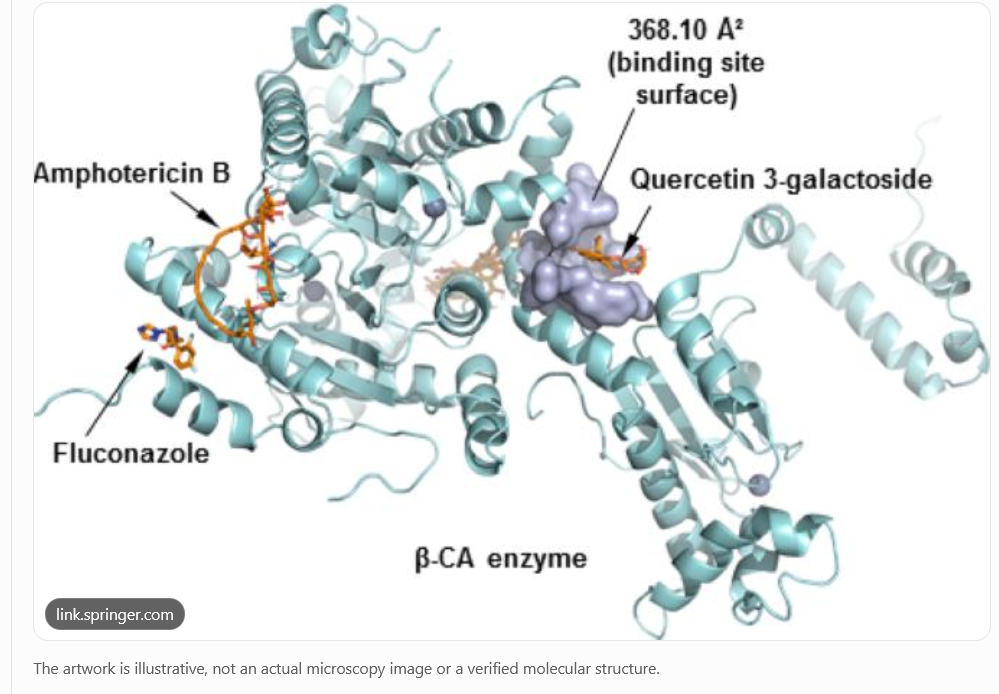
A 2025 study by Cao and colleagues examined how alpha-lipoic acid interacts with fructose-1,6-bisphosphate aldolase, an enzyme involved in the metabolism of C. albicans. The researchers investigated an allosteric binding site — a location where a molecule can bind and influence an enzyme's activity.
This provides a scientific basis for further investigation. It does not establish that an oral ALA supplement reaches the relevant target in an infected person, produces an effective antifungal effect in the body, or cures an infection.
What does the evidence actually show?
The key question is not simply whether ALA can interact with Candida in an experiment. It is whether taking ALA has been shown to improve outcomes in people with a confirmed Candida infection.
The distinction between laboratory findings and clinical outcomes is essential. An effect observed in an isolated enzyme, cell culture or other experimental model cannot automatically be translated into an effective dose, a safe treatment or a successful clinical outcome.
For ALA to become an established Candida treatment, researchers would need appropriate evidence showing that it works in people, at a suitable dose, with acceptable safety and clinically meaningful outcomes.
The 2025 enzyme study is not, by itself, evidence that taking an ALA supplement will clear a Candida infection.

Does alpha-lipoic acid help with Candida overgrowth?
At present, there is insufficient clinical evidence to recommend ALA supplements for treating Candida overgrowth or candidiasis.
It is also important to clarify what is meant by “Candida overgrowth.” Candida yeasts naturally live in several parts of the body, including the mouth, gastrointestinal tract and vagina. Their presence does not automatically mean that someone has an infection requiring treatment. Candidiasis refers to an infection caused by Candida, and diagnosis depends on the affected body site and the relevant clinical findings.
Colonization is not the same as infection
Candida can be present without causing illness. A finding of Candida alone does not automatically mean that an infection requiring treatment is present.
This distinction matters because broad symptoms such as fatigue, bloating or difficulty concentrating are not, on their own, proof of a Candida infection. Attributing nonspecific symptoms to Candida without appropriate assessment can distract from other possible explanations.
If you are concerned about persistent symptoms, a healthcare professional can help determine whether candidiasis is present and whether another condition may be responsible.
What about alpha-lipoic acid’s antioxidant properties?
ALA is studied partly because of its role in cellular energy metabolism and antioxidant processes. This has prompted research into its possible effects in a range of conditions.
However, antioxidant activity is not the same as antifungal activity, and neither automatically establishes a clinical benefit.
Even if a compound influences oxidative stress or another biological process, that does not prove it can eliminate Candida, prevent recurrent infections or restore a particular microbial balance in the human body.
The same principle applies to other supplements marketed for gut health or fungal concerns: a plausible mechanism can justify research, but treatment claims require evidence from studies that directly test the claimed outcome.
Is alpha-lipoic acid safe to take?
ALA has been studied in human clinical trials for conditions other than Candida infection. A 2020 systematic review and meta-analysis by Fogacci and colleagues examined 71 clinical studies involving 4,749 participants and found no statistically significant increase in treatment-emergent adverse events overall in the ALA groups compared with placebo. However, those findings do not establish that ALA is appropriate for everyone or that it is safe and effective for treating Candida.
The National Center for Complementary and Integrative Health (NCCIH) identifies headache, heartburn, nausea and vomiting among the reported side effects of ALA supplementation. ALA may also interact with medications, so individual circumstances matter.
Before taking ALA supplements, consider the following:
- Other medications: Ask a healthcare professional or pharmacist to check for possible interactions.
- Existing health conditions: Discuss supplementation with a healthcare professional if you have a medical condition or take regular medication.
- Treatment decisions: Do not delay diagnosis or replace an established treatment with ALA on the assumption that its laboratory effects will translate into a benefit for you.
The fact that a supplement has been studied in people for one purpose does not establish its safety or effectiveness for every other purpose.
What is the established treatment for Candida infections?
Treatment depends on the type of candidiasis, its severity and the person's circumstances. Established treatments use antifungal medicines, which may be applied locally, taken orally or administered intravenously, depending on the infection.
For example:
- Vaginal yeast infections: Antifungal creams, vaginal preparations or oral medication may be appropriate, depending on the circumstances.
- Oral thrush: Treatment may involve an antifungal gel, lozenge or other medication.
- More serious Candida infections: These require medical assessment and appropriately selected antifungal treatment.
Symptoms can overlap with other conditions, so choosing a treatment based on symptoms alone may lead to an incorrect diagnosis. The CDC recommends appropriate testing and clinical assessment where indicated, particularly when symptoms persist or recur.
ALA is not an established substitute for these treatments. If you suspect you have a Candida infection, seek advice appropriate to the affected body site rather than relying on a supplement to resolve it.
Frequently asked questions
Can alpha-lipoic acid kill Candida?
Research published in 2025 investigated how ALA interacts with an enzyme in Candida albicans. This is relevant to antifungal research, but it does not establish that taking ALA supplements kills Candida in the human body or treats an infection.
Is alpha-lipoic acid a proven treatment for Candida overgrowth?
No. The research discussed here does not establish ALA as a clinically effective treatment for Candida infections. Its use for this purpose cannot currently be recommended on the basis of these findings.
Can I take alpha-lipoic acid alongside antifungal medication?
Whether combining ALA with a particular medication is appropriate depends on the medicines involved and your health circumstances. Ask your healthcare professional or pharmacist to check for potential interactions before combining supplements and medication. Do not stop or change a prescribed treatment without appropriate advice.
Does having Candida in the gut mean I have a Candida infection?
Not necessarily. Candida can normally live in parts of the gastrointestinal tract. Detecting the organism is not, by itself, proof of an infection or evidence that it explains symptoms. The clinical context and appropriate diagnostic findings matter.
Should I take alpha-lipoic acid to prevent recurrent yeast infections?
There is insufficient clinical evidence to recommend ALA for preventing recurrent Candida infections. Repeated symptoms deserve appropriate assessment, as the diagnosis, underlying factors and suitable treatment may need to be reviewed.
The bottom line
Alpha-lipoic acid is an interesting subject for scientific research because it interacts with biological processes involved in cellular energy metabolism. A 2025 study investigating its interaction with a Candida albicans enzyme offers a possible direction for further antifungal research.
But a potential research target is not the same as a proven treatment.
There is not enough clinical evidence to recommend alpha-lipoic acid supplements for treating Candida infections in humans. If you suspect candidiasis, appropriate assessment and established antifungal treatments remain the relevant route to care. ALA should not be used as a replacement for them.
Understanding what the research actually demonstrates — and what remains unproven — helps separate promising laboratory science from practical health advice.
Scientific references
- Cao H, Huang Z, Hu X, et al. (2025). Structural insight into the unexploited allosteric binding site of fructose 1,6-bisphosphate aldolase from C. albicans with α-lipoic acid. International Journal of Biological Macromolecules, 309(Pt 4), 143096. https://doi.org/10.1016/j.ijbiomac.2025.143096
- Fogacci F, Rizzo M, Krogager C, et al. (2020). Safety Evaluation of α-Lipoic Acid Supplementation: A Systematic Review and Meta-Analysis of Randomized Placebo-Controlled Clinical Studies. Antioxidants, 9(10), 1011. https://doi.org/10.3390/antiox9101011
- National Center for Complementary and Integrative Health (NCCIH). Diabetes and Dietary Supplements: What You Need To Know. Read the NCCIH guidance.
- Centers for Disease Control and Prevention (CDC). Treatment of Candidiasis. Read the CDC guidance.
- Centers for Disease Control and Prevention (CDC). Vulvovaginal Candidiasis — STI Treatment Guidelines. Read the CDC guidance.
- Centers for Disease Control and Prevention (CDC). Candidiasis Basics. Read the CDC overview.
Evidence-based health information
Written by the Understanding Your Microbiome Editorial Team
Last updated: September 2026
Medical information notice: This article is for educational and informational purposes only. It is not a substitute for professional medical advice, diagnosis or treatment. Consult a qualified healthcare professional about symptoms, suspected Candida infections, supplements and treatment decisions.