Adrenal fatigue and candida: an evidence-based guide
There is no reliable clinical evidence establishing a direct connection between “adrenal fatigue” and Candida infections. The term adrenal fatigue is not recognised as a proven medical condition, while Candida is a yeast that can live in the body without causing illness. When Candida grows out of control and causes an infection, it is known as candidiasis.
The short answer: The proposed connection between adrenal fatigue and Candida is not established by reliable clinical evidence.
Persistent fatigue is real, but it does not automatically indicate an adrenal problem or a Candida infection. Understanding what medical evidence actually shows can help separate plausible-sounding health claims from recognised conditions and appropriate treatment.
What is adrenal fatigue?
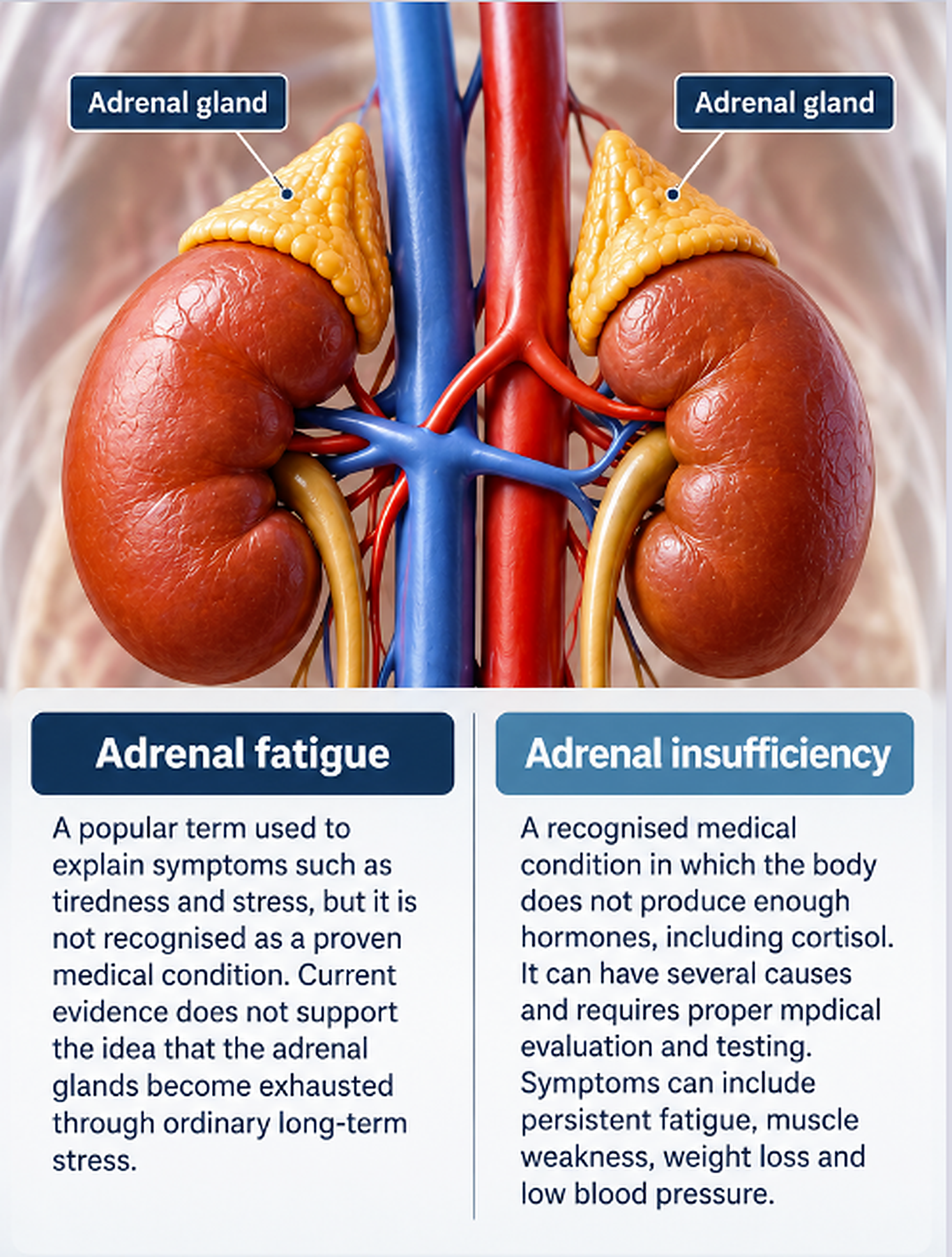
“Adrenal fatigue” is a term used in some wellness settings to explain symptoms such as tiredness, difficulty concentrating, sleep problems and feeling unable to cope with stress. The theory suggests that prolonged physical or emotional stress eventually exhausts the adrenal glands, leaving them unable to produce enough hormones to meet the body’s needs.
However, the Endocrine Society states that there is no scientific proof supporting adrenal fatigue as a genuine medical condition. A systematic review published in 2016 examined 58 studies investigating the proposed relationship between adrenal function and fatigue. The researchers found that the available evidence did not substantiate the condition as it is commonly described.
This does not mean that stress cannot affect wellbeing, sleep or energy levels. Nor does it mean that symptoms attributed to adrenal fatigue should be ignored. It means that the proposed explanation—that the adrenal glands become exhausted through ordinary long-term stress—has not been established by good scientific evidence.
The symptoms associated with adrenal fatigue are also non-specific. They can occur for many reasons, which is why a recognised medical assessment is more useful than assuming a single cause.
Adrenal fatigue versus adrenal insufficiency
Although the terms may sound similar, adrenal fatigue and adrenal insufficiency are not the same thing.
Adrenal insufficiency is a recognised medical condition in which the body does not produce enough of certain hormones, including cortisol. One form is Addison’s disease, which can occur when the adrenal glands are damaged. Adrenal insufficiency can also have other causes, including problems affecting the pituitary gland or the prolonged use of certain corticosteroid medicines followed by abrupt withdrawal.
According to the National Institute of Diabetes and Digestive and Kidney Diseases (NIDDK), symptoms can include persistent fatigue, muscle weakness, reduced appetite, weight loss and abdominal pain. Some people also experience nausea, low blood pressure, dizziness or salt cravings.
These symptoms overlap with those sometimes attributed to adrenal fatigue, but symptoms alone cannot establish the diagnosis. Clinicians use medical history, blood tests and, when appropriate, stimulation tests to investigate suspected adrenal insufficiency.
This distinction is important. Someone experiencing ongoing fatigue should not be told that their adrenal glands are simply exhausted, nor should a potentially serious hormonal disorder be overlooked because the symptoms have been attributed to stress.
What is Candida, and when does it cause an infection?
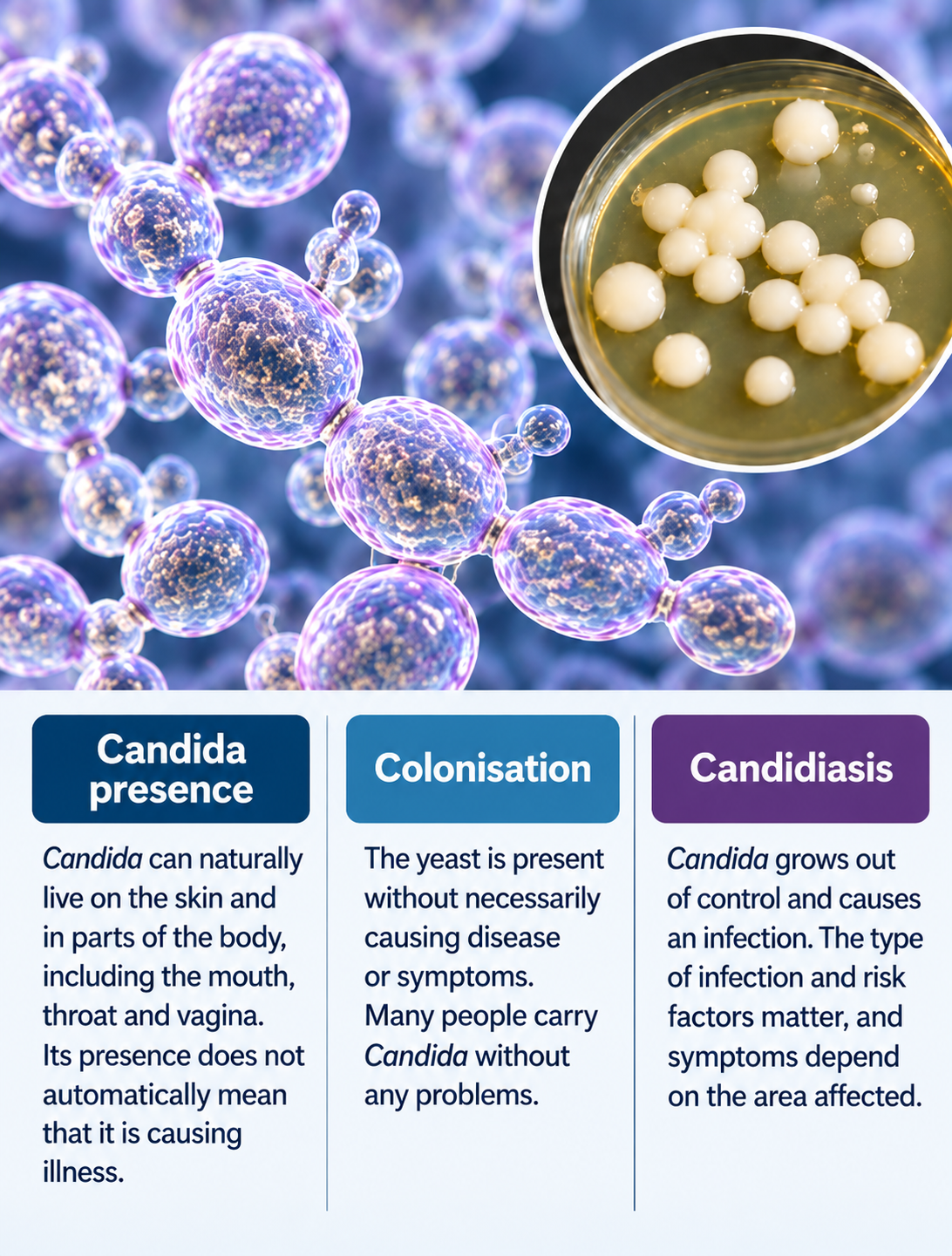
Candida is a type of yeast that can naturally live on the skin and in parts of the body, including the mouth, throat and vagina. Its presence does not automatically mean that someone has an infection.
The US Centers for Disease Control and Prevention (CDC) explains that candidiasis occurs when Candida grows out of control and causes an infection. Depending on the affected area, this can include vaginal yeast infections, oral thrush, infections of the oesophagus or, in certain higher-risk patients, invasive infections affecting the bloodstream or internal organs.
Symptoms depend on the type of infection. Vaginal candidiasis may cause itching, soreness and discharge. Oral thrush can produce white patches, redness or soreness in the mouth. More serious forms require prompt medical assessment.
The risk of candidiasis is not the same for everyone. Factors can include recent antibiotic use, diabetes, a weakened immune system, certain medications and particular medical circumstances. Invasive candidiasis is especially associated with hospital care and other specific risk factors; it is not a general explanation for symptoms in otherwise healthy people.
Candida presence, colonisation and infection
It is therefore important to distinguish three separate ideas:
- Candida presence: the yeast is present in or on the body.
- Colonisation: the organism is present without necessarily causing disease.
- Candidiasis: Candida is causing a recognised infection.
Finding Candida does not automatically prove that it is responsible for someone’s symptoms. The clinical context and the appropriate diagnostic assessment matter.
Can Candida cause persistent fatigue?
Fatigue is a common symptom with many possible explanations. It can be associated with inadequate sleep, stress, medication effects, anaemia, thyroid disorders, mood-related conditions and other medical problems. In some circumstances, an infection or an underlying illness can also contribute.
However, evidence does not establish Candida as a general cause of persistent fatigue in the way suggested by broad online claims about systemic Candida overgrowth.
An older clinical study published in The American Journal of Medicine in 1989 examined 100 patients presenting with chronic fatigue. The researchers compared people who believed their fatigue was related to chronic candidiasis with those who did not. They were unable to identify clinical findings specific to the proposed “yeast connection” (study abstract).
This study is old and relatively limited, so it cannot answer every question about Candida and fatigue. It does, however, illustrate why a proposed connection should not be treated as established simply because people report similar symptoms.
A confirmed Candida infection can cause illness, and a person with an infection may feel unwell. That is different from claiming that Candida routinely explains ongoing tiredness, concentration problems or a wide range of unrelated symptoms.
Does adrenal fatigue make Candida infections more likely?
There is no established clinical evidence showing that the proposed condition of adrenal fatigue increases a person’s risk of candidiasis. Since adrenal fatigue itself is not a recognised diagnosis, it should not be used as an explanation for suspected Candida infection.
The relationship between hormones, immune function and infection is more complex than that. Some recognised health conditions and treatments can influence candidiasis risk. The CDC, for example, identifies diabetes, immune suppression, antibiotics and certain corticosteroid treatments among relevant risk factors, depending on the type of infection.
That evidence should not be stretched into a claim that ordinary stress exhausts the adrenal glands and thereby causes Candida to grow out of control. A plausible-sounding biological explanation is not the same as a demonstrated clinical relationship.
If someone has recurring symptoms suggestive of candidiasis, the useful next step is to establish what is causing them rather than assume that adrenal fatigue is the underlying problem.
What about supplements, diets and Candida protocols?
Products marketed for “adrenal support” or broad Candida-cleansing programmes are often promoted with claims that they can restore hormone balance, eliminate yeast overgrowth or resolve persistent fatigue.
These claims need careful scrutiny. There is no validated test for adrenal fatigue, and the Endocrine Society warns that tests and treatments promoted for the condition are not supported by good scientific evidence. Some supplements may also carry risks, particularly when their ingredients, doses or effects on hormone function are not well understood.
Similarly, restrictive diets or supplements should not be presented as proven treatments for a generalised Candida-related fatigue syndrome. The fact that a dietary change makes someone feel better does not, by itself, prove that Candida was the cause of their symptoms.
Recognised candidiasis is treated with antifungal medicines, with the choice depending on the site and severity of infection and the person’s circumstances. A clinician can help determine whether an infection is present and what treatment is appropriate.
A balanced diet, adequate sleep and sustainable approaches to managing stress can support general wellbeing. They should not be promoted as a cure for adrenal insufficiency or as a substitute for appropriate treatment of a confirmed infection.
When should you seek medical advice?
If fatigue persists, worsens or interferes with daily life, arrange an assessment with a healthcare professional rather than assuming that it is caused by adrenal fatigue or Candida. The appropriate evaluation will depend on the symptoms, medical history, medicines and other relevant factors.
Seek medical advice for symptoms that may indicate candidiasis, particularly if they recur, do not improve or occur alongside risk factors such as diabetes or a weakened immune system.
Persistent fatigue accompanied by unexplained weight loss, significant weakness, abdominal symptoms or dizziness on standing also warrants medical assessment. Severe weakness, fainting, confusion, persistent vomiting or signs of severe illness require urgent medical attention.
Do not stop prescribed corticosteroid medicines suddenly without medical advice. If you are concerned about adrenal insufficiency, a healthcare professional can decide whether hormone testing or further investigation is appropriate.
Key takeaways
The proposed connection between adrenal fatigue and Candida is not established by reliable clinical evidence. “Adrenal fatigue” is not a recognised medical diagnosis, although genuine adrenal insufficiency is a real hormonal disorder that requires proper assessment.
Candida can live in the body without causing illness, and candidiasis occurs when it causes an infection. Its presence should not automatically be blamed for persistent fatigue or other non-specific symptoms.
The most useful approach is to investigate ongoing symptoms, distinguish recognised medical conditions from unproven explanations, and avoid treatments marketed for conditions that have not been established.
Scientific references
- Endocrine Society. Adrenal Fatigue.
- Cadegiani FA, Kater CE. Adrenal fatigue does not exist: a systematic review. BMC Endocrine Disorders. 2016;16:48.
- NIDDK. Adrenal Insufficiency and Addison’s Disease.
- CDC. Candidiasis Basics.
- CDC. Risk Factors for Candidiasis.
- Renfro L, Feder HM Jr, Lane TJ, Manu P, Matthews DA. Yeast connection among 100 patients with chronic fatigue. The American Journal of Medicine. 1989;86(2):165–168.
Medical information notice: This article is for educational purposes only and is not a substitute for professional medical advice, diagnosis or treatment. Seek advice from a qualified healthcare professional about persistent symptoms or concerns about a possible infection or hormonal disorder.