Alkaline Water and Candida: An Evidence-Based Guide
Can drinking alkaline water prevent or treat Candida? The evidence does not support this claim. Learn what water pH means, what is known about Candida, and which treatments are evidence-based.
The short answer: There is no reliable clinical evidence that drinking alkaline water prevents or treats Candida infections.
Although pH can influence fungal growth under certain conditions, this does not establish that alkaline water has an antifungal effect in the human body.
What is alkaline water?
Alkaline water has a pH above 7, while neutral water has a pH of approximately 7. Some bottled products achieve their higher pH through naturally occurring minerals, added minerals, or processing.
Supporters sometimes claim that alkaline water can balance the body’s acidity or improve general health. However, the body tightly regulates blood pH through the lungs and kidneys.
Drinking alkaline water does not simply make your blood or body tissues alkaline. The digestive system also affects the water’s pH as it passes through the stomach.
Consequently, claims that alkaline water can change the body’s internal environment enough to eliminate Candida require convincing clinical evidence. That evidence is currently lacking.
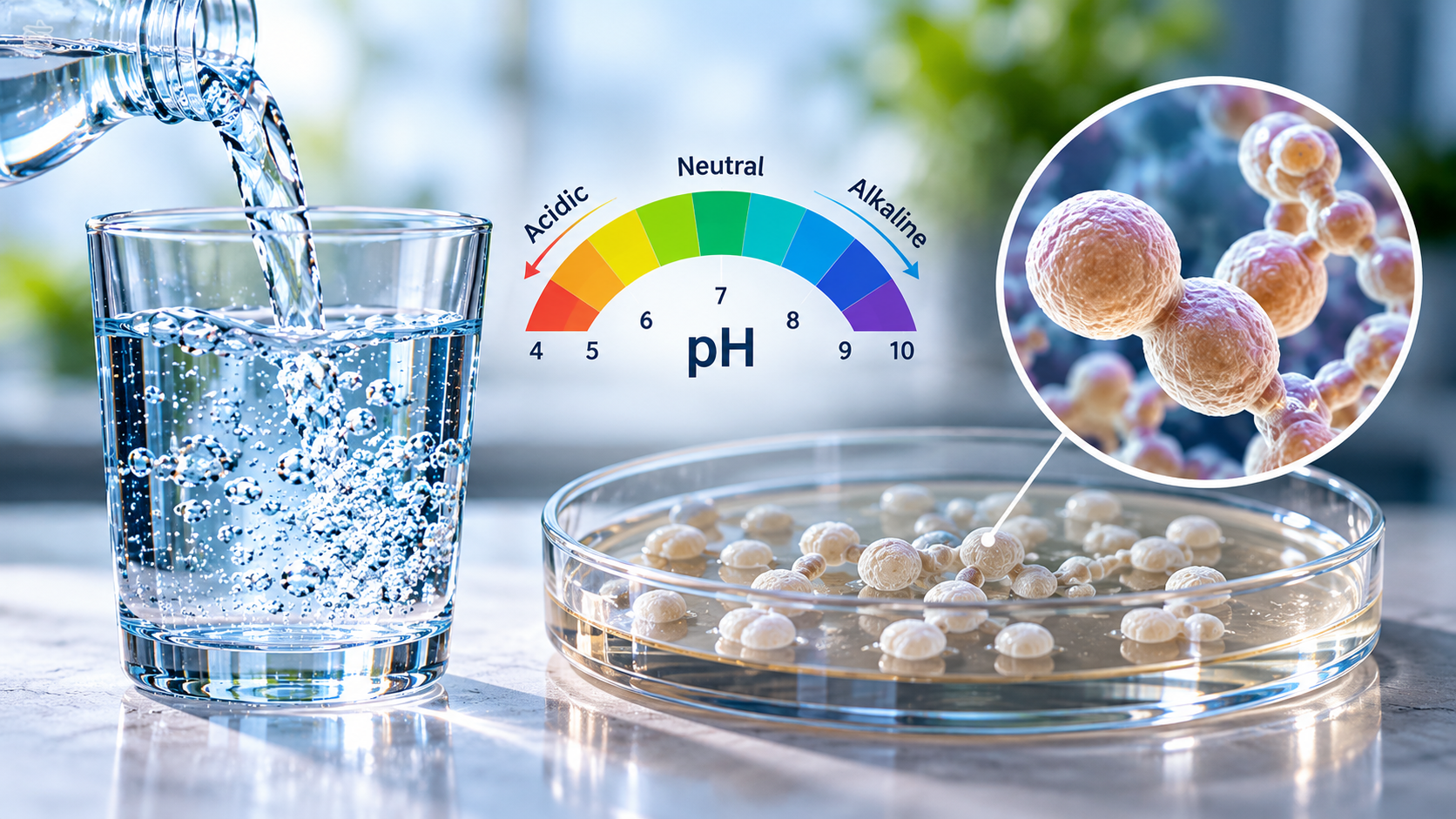
Can alkaline water kill Candida?
Candida is a group of yeasts that can live harmlessly on or inside the body. Under certain circumstances, these organisms can multiply and cause infections, including oral thrush and vaginal yeast infections.
Fungal growth can be affected by environmental conditions, including pH. However, the effects depend on the Candida species and the conditions being studied.
There is no established clinical evidence showing that alkaline drinking water kills Candida in the human body, clears an infection, or prevents recurrence.
It is also important to distinguish alkaline drinking water from specially prepared electrolyzed water investigated for particular disinfectant or oral-care applications. These products can have different chemical properties and uses, so their findings cannot automatically be applied to drinking alkaline water.
Does alkaline water change the body’s pH or help the gut microbiome?
Different parts of the body maintain different pH conditions. The stomach is strongly acidic, while other tissues and body fluids have their own carefully regulated environments.
The vaginal environment provides a useful example. Vaginal candidiasis commonly occurs while vaginal pH remains below 4.5. Drinking alkaline water has not been shown to reliably alter vaginal pH or treat a vaginal yeast infection.
The gut microbiome is similarly complex. Its microorganisms interact with one another and are influenced by diet, the intestinal environment, and many other factors.
Although researchers continue to investigate how pH affects microorganisms, there is insufficient clinical evidence to conclude that drinking alkaline water improves the gut microbiome in a way that prevents or treats Candida infections.
Claims about alkaline water and Candida therefore go beyond what current research establishes.
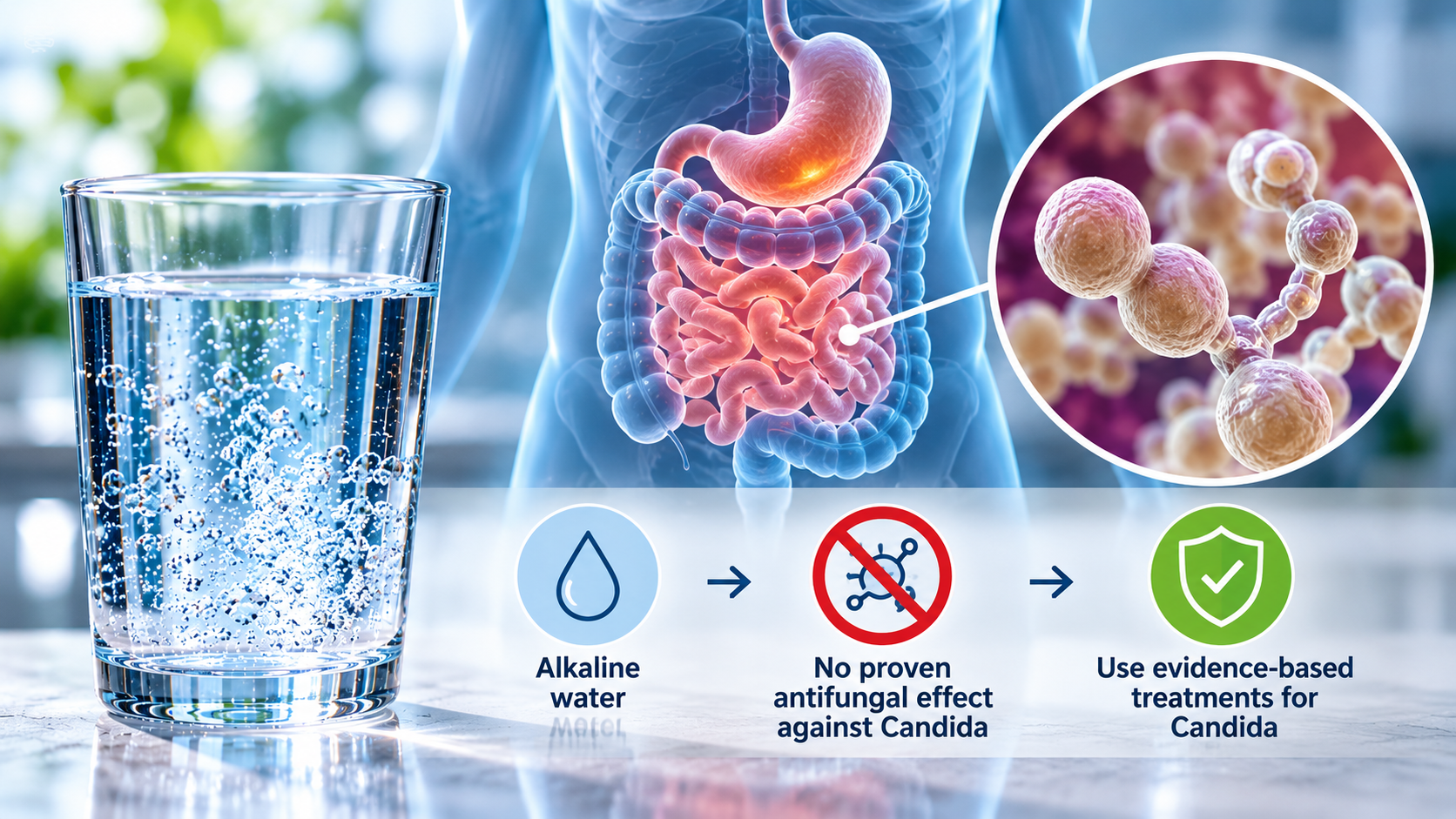
What treatments actually help Candida infections?
Treatment depends on the type and severity of the infection. Established treatments for candidiasis use antifungal medicines.
- Vaginal yeast infections: Antifungal creams, vaginal preparations, or appropriate oral medication may be recommended.
- Oral thrush: Antifungal gels or other oral treatments may be used, depending on the severity of the infection.
- Recurrent or complicated infections: Medical assessment may be needed to confirm the diagnosis and determine the most appropriate treatment.
Symptoms that resemble a yeast infection can have other causes, so self-diagnosis is not always reliable. Seek medical advice if symptoms persist, recur, worsen, or are unfamiliar.
Alkaline water should not replace prescribed antifungal medication or delay appropriate medical assessment.
Is alkaline water worth drinking?
If you enjoy alkaline water, it may be a reasonable personal preference for hydration, provided the product is safe for you. However, there is no established reason to pay extra for it specifically to manage Candida.
People with kidney disease or other relevant medical conditions should discuss high-pH or mineral-enriched water with a healthcare professional, particularly when products contain substantial amounts of added minerals.
For everyday hydration, ordinary safe drinking water remains a sensible choice.
The bottom line
Alkaline water is sometimes promoted as a way to discourage Candida growth or correct the body’s acidity. However, these claims go beyond the available clinical evidence.
Drinking alkaline water has not been shown to prevent or treat Candida infections. The body’s acid–base balance is tightly regulated, and changing the pH of drinking water does not establish an antifungal effect at an infection site.
If you suspect candidiasis, focus on obtaining an accurate diagnosis and using an appropriate, evidence-based treatment rather than relying on alkaline water.
References
- Mayo Clinic. Alkaline water: Better than plain water? Read the guidance.
- Centers for Disease Control and Prevention (CDC). Treatment of Candidiasis. Read the guidance.
- Centers for Disease Control and Prevention (CDC). Candidiasis Basics. Read the overview.
- Centers for Disease Control and Prevention (CDC). Vulvovaginal Candidiasis — STI Treatment Guidelines. Read the guidelines.
Evidence-based health information
Written by the Understanding Your Microbiome Editorial Team
Last updated: October 2026
Medical information notice: This article is for educational and informational purposes only. It is not a substitute for professional medical advice, diagnosis or treatment. Consult a qualified healthcare professional about symptoms, suspected Candida infections and treatment decisions.