Beet Kvass and Candida: An Evidence-Based Guide
Beet kvass is a traditional fermented beetroot drink sometimes promoted for gut health and Candida control. But can it actually help with a Candida infection?
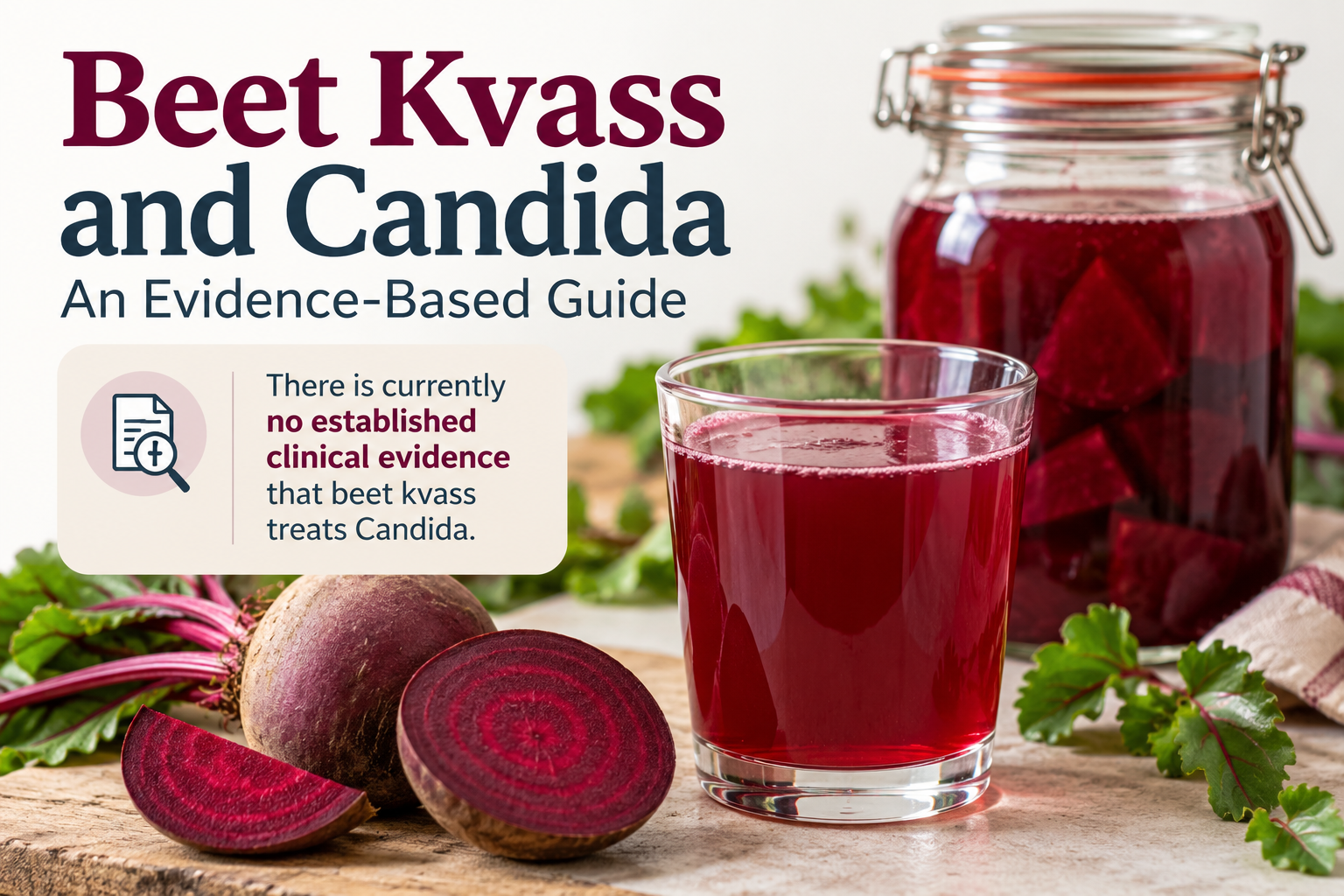
The short answer: There is currently insufficient clinical evidence that drinking beet kvass prevents or treats Candida infections.
Laboratory research has investigated whether fermented beetroot preparations affect Candida, but the findings do not demonstrate that drinking beet kvass has an antifungal effect in the human body.
What is beet kvass?
Beet kvass is a fermented drink typically made from beetroot, water and salt. During fermentation, microorganisms, including lactic acid bacteria, convert some of the naturally occurring sugars into acids and other compounds.
The result is a tangy drink that may contain live microorganisms, depending on how it is prepared and stored.
Beet kvass is sometimes described as a probiotic drink. However, not all fermented foods qualify as probiotics. To establish a probiotic benefit, specific microorganisms must be identified and shown to provide a health benefit in appropriate amounts.
Can beet kvass help fight Candida?
Candida is a group of yeasts that can naturally live on the skin and in areas such as the mouth, gut and vagina. Their presence is not necessarily harmful.
A Candida infection, known as candidiasis, develops when these organisms cause disease. Examples include oral thrush and vaginal yeast infections.
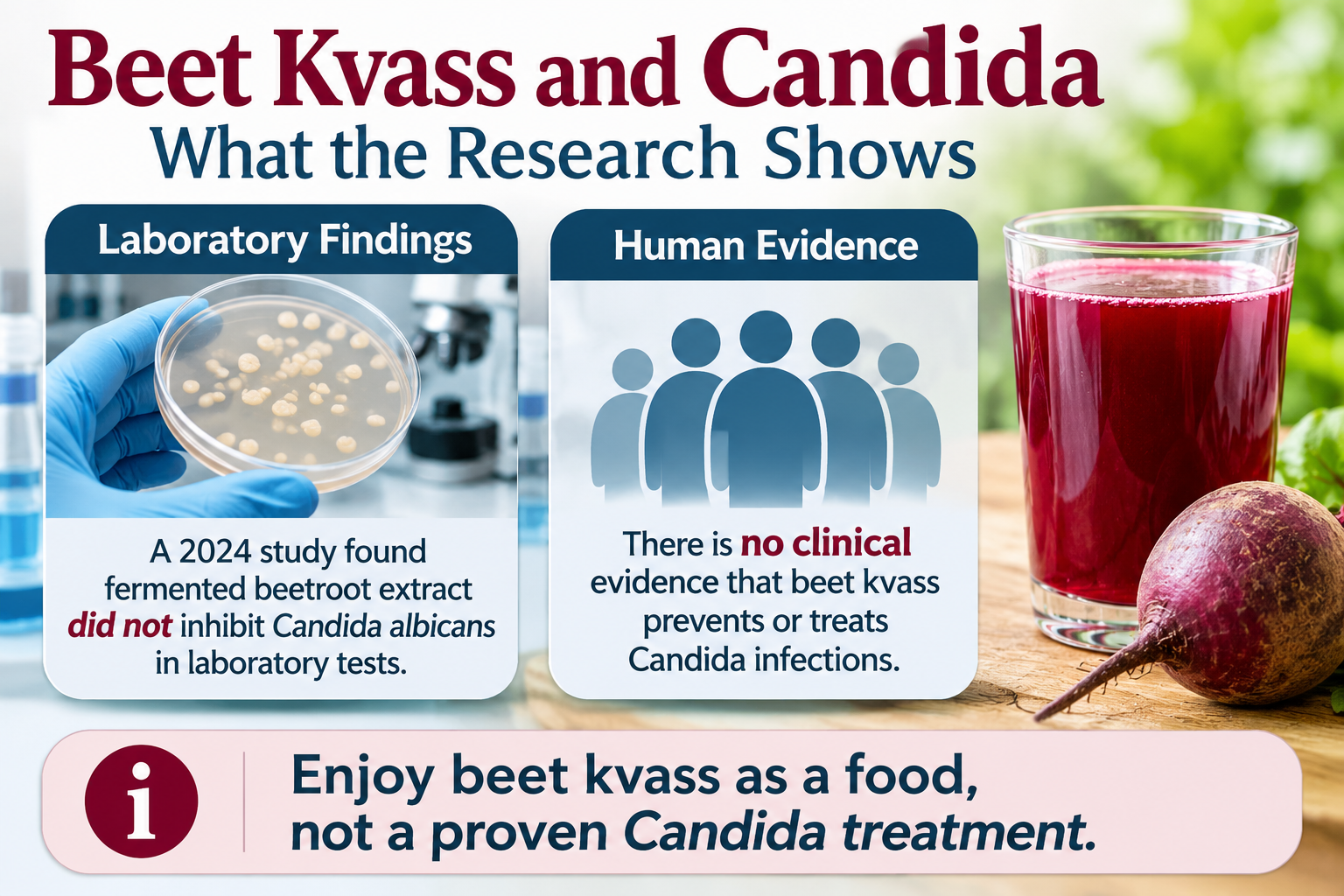
Some laboratory research has investigated whether beetroot preparations can inhibit Candida. However, a 2024 study found that its fermented beetroot extract did not inhibit Candida albicans under the test conditions.
This was a laboratory experiment, not a study of people drinking beet kvass, so it cannot establish whether beet kvass affects Candida in the human body.
This result does not prove that every beet kvass preparation has no antifungal activity. It does show why claims about fermented vegetables should not automatically be applied to beet kvass.
What about probiotics and gut health?
Fermented foods have attracted considerable interest because of their potential interactions with the gut microbiome.
Some contain live microorganisms, but the types and amounts can vary considerably between products. Fermentation alone does not guarantee a clinically meaningful probiotic effect.
Research into beetroot consumption has reported changes in certain gut bacteria. However, studies involving beetroot juice cannot establish the effects of fermented beet kvass, particularly in people with Candida infections.
Research on particular probiotic strains or other fermented foods also cannot be assumed to apply to beet kvass.
At present, there is no convincing clinical evidence that beet kvass restores a healthy balance of gut microorganisms or reduces Candida overgrowth.
Could beet kvass make Candida worse?
There is insufficient clinical research to establish whether beet kvass increases Candida growth or worsens candidiasis.
Some people worry about the naturally occurring sugars in beetroot. Fermentation uses some of these sugars, but the amount remaining varies with the ingredients, fermentation process and finished product.
It would therefore be misleading to claim that all beet kvass is sugar-free or that drinking it necessarily encourages Candida growth.
People may also respond differently to fermented drinks. Digestive discomfort after drinking beet kvass does not, by itself, demonstrate that Candida is growing or causing symptoms.
Is beet kvass safe to drink?
Properly prepared beet kvass can be enjoyed as a fermented food, but it should not be regarded as a medical treatment.
Homemade fermentation requires care. Using clean equipment, following a tested recipe and maintaining appropriate fermentation and storage conditions helps reduce food-safety risks. Products showing signs of spoilage should be discarded.
Commercial preparations can also differ in their salt content, remaining sugars and processing methods. Checking the label is sensible, particularly for people who need to limit sodium or sugar.
People with weakened immune systems or significant medical conditions should seek individual medical advice before consuming unpasteurized fermented products.
What actually treats Candida infections?
Treatment depends on the location and severity of the infection.
Established Candida infections are generally treated with antifungal medicines, which may include topical creams, oral medications or other preparations.
For vaginal yeast infections, the US Centers for Disease Control and Prevention states that substantial evidence does not support probiotics as a treatment.
Persistent or recurring symptoms should be assessed by a healthcare professional rather than attributed automatically to Candida. Finding Candida in the body does not always mean that it is responsible for symptoms.
The bottom line
Beet kvass may be an enjoyable addition to a varied diet, but there is currently insufficient clinical evidence that it prevents, controls or treats Candida infections.
Laboratory research into fermented beetroot is scientifically interesting, yet it cannot establish the effects of drinking beet kvass in humans.
Enjoy beet kvass as a food if it suits you, not as a substitute for evidence-based Candida treatment.
References
- Centers for Disease Control and Prevention. Treatment of Candidiasis. Updated 24 April 2024. https://www.cdc.gov/candidiasis/treatment/
- Centers for Disease Control and Prevention. Vulvovaginal Candidiasis — STI Treatment Guidelines. https://www.cdc.gov/std/treatment-guidelines/candidiasis.htm
- Marco ML, et al. The ISAPP consensus statement on fermented foods. Nature Reviews Gastroenterology & Hepatology. 2021;18:196–208. https://pmc.ncbi.nlm.nih.gov/articles/PMC7925329/
- Determination of Post-Fermentation Waste from Fermented Vegetables as Potential Substitutes for Preservatives in O/W Emulsion. 2024. Laboratory study; see Table 4 for antifungal test results. https://pmc.ncbi.nlm.nih.gov/articles/PMC11122242/
- University of Minnesota Extension. Fermentation and food safety guidance. https://extension.umn.edu/food-safety
This article is for general informational purposes and is not a substitute for professional medical advice, diagnosis or treatment. Seek advice from a qualified healthcare professional about symptoms or treatment decisions.