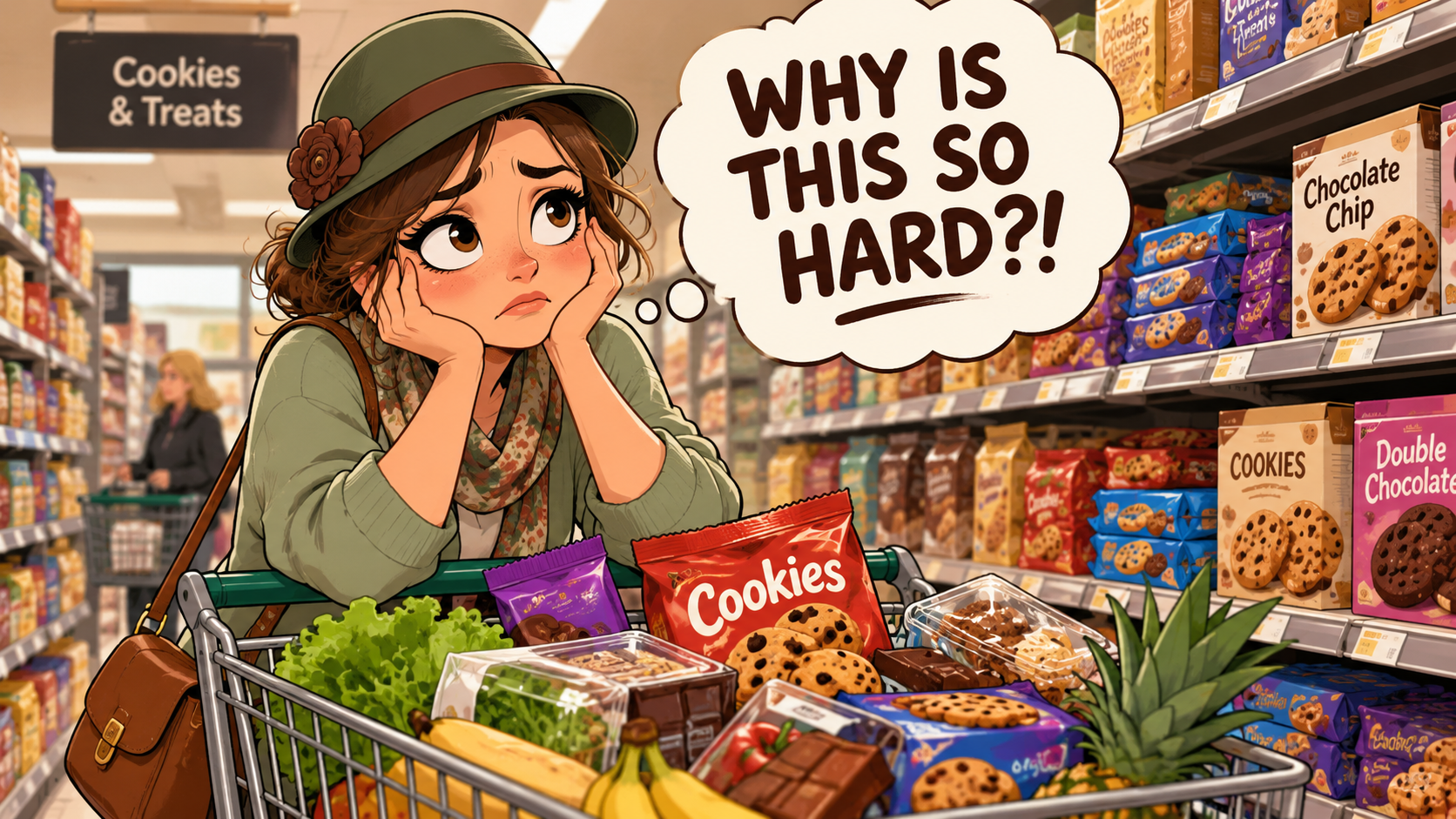
Ever gone shopping for vegetables and come home with cookies? You’re not alone!
You walk into the grocery store with the best intentions. Fresh vegetables, fruit, something healthy for dinner. You’ve even written a shopping list.
Then you spot the cookie aisle.
Suddenly, those chocolate chip cookies are calling your name. Before you know it, your cart contains more treats than vegetables.
Sound familiar?
Why do we crave sugar, even when we’re not hungry? And could our gut health have something to do with it?
Let’s find out.
The short answer: Sugar cravings can reflect hunger, sleep, stress, habits, or simply tempting food cues. Research is exploring the gut microbiome’s role, but cravings alone are not evidence of a Candida infection.
1. Why Do I Crave Sugar All the Time?
Sugar cravings are incredibly common, and there isn’t just one explanation.
Sometimes we’re hungry. Other times, we’re tired, stressed, bored, or simply tempted by something delicious.
Sweet foods activate reward pathways in the brain, making them particularly appealing.
Several everyday factors can influence cravings:
- Hunger: Going too long without eating can make tempting foods especially appealing.
- Stress: Emotional pressure can change appetite and increase the desire for comforting foods.
- Poor sleep: Lack of sleep can affect appetite regulation and make rewarding foods more attractive.
- Habits: If you regularly enjoy something sweet after dinner, your brain may begin expecting it.
That’s why sugar cravings can appear even when your body doesn’t actually need more food.
2. Why Is It So Hard to Resist Sweets at the Grocery Store?
You’ve probably experienced this.
You weren’t thinking about cookies when you entered the store. But the moment you see your favorite brand, you suddenly want them.
This is known as a food cue.
Our brains associate familiar foods with pleasure, memories, and previous experiences. Simply seeing or smelling something delicious can trigger a craving.
Grocery stores are full of these triggers.
Colorful packaging, tempting displays, special offers, and strategically placed treats all encourage impulse purchases.
And sometimes, the explanation is surprisingly simple.
You saw a cookie. You remembered how good cookies taste. Now you want one.
Not every craving has a complicated biological explanation!
3. Why Do I Crave Sweets Even When I’m Full?
Ever finished dinner feeling completely satisfied, only to discover you still have room for chocolate?
That’s because hunger and cravings aren’t quite the same thing.
Hunger is your body’s signal that it needs food.
A craving is a strong desire for something specific.
You might not want another helping of dinner, but dessert can still sound wonderful.
Habits, emotions, food availability, and the brain’s reward system can all influence this.
So craving sweets after eating doesn’t automatically mean something is wrong with your digestion.
4. Can Gut Bacteria Influence Sugar Cravings?
Now here’s where things get interesting.
Your digestive system contains trillions of microorganisms, collectively known as your gut microbiome.
These microorganisms help with digestion and interact with processes involved in metabolism and communication between your gut and brain.
Scientists are investigating whether gut bacteria may influence appetite, food preferences, and cravings.
Some animal research suggests microbes can affect feeding behavior. However, human research is still developing.
We don’t yet have convincing evidence that particular gut bacteria directly make people crave cookies, chocolate, or other sugary foods.
The connection between gut health and sugar cravings is fascinating, but there’s still plenty to discover.
5. Can Candida Cause Sugar Cravings?
If you’ve researched sugar cravings online, you may have encountered claims about Candida.
Candida is a yeast that naturally lives in and on the human body, including in the digestive tract.
Usually, it causes no problems. Under certain circumstances, however, Candida can cause infections such as oral thrush or vaginal yeast infections.
But does Candida make you crave sugar?
You may have read that Candida encourages people to eat sweets because yeast uses sugar for energy.
While Candida can use sugars, that doesn’t establish that it can influence human cravings.
There is currently no convincing clinical evidence that ordinary sugar cravings are a reliable sign of Candida overgrowth.
So although Candida and sugar are frequently discussed together, craving chocolate isn’t evidence that you have a Candida infection.
6. Does Eating Sugar Feed Candida?
Technically, Candida can use glucose as an energy source.
But that doesn’t mean eating cookies automatically causes Candida overgrowth or infection.
Our bodies carefully regulate blood glucose, and Candida infections involve several factors, including immune function, medications, and underlying health conditions.
For example, poorly controlled diabetes is a recognized risk factor for certain Candida infections.
However, there’s insufficient evidence that simply avoiding sugar prevents or resolves ordinary Candida infections.
It’s a more complicated relationship than the popular claim that sugar feeds Candida.
7. What Can You Do About Constant Sweet Cravings?
If you regularly find yourself wondering why you crave sweets, start by noticing when those cravings appear.
Are you tired? Stressed? Hungry? Or have you simply spotted something delicious?
A few everyday habits may help:
- Eat regular, satisfying meals.
- Get enough sleep.
- Notice whether stress influences your appetite.
- Keep a shopping list if impulse buying bothers you.
- Enjoy sweet foods without feeling that every craving needs an explanation.
If cravings are unusually intense or accompanied by persistent thirst, frequent urination, or unexplained weight changes, speak with a healthcare professional.
The Bottom Line
Sugar cravings are influenced by a combination of hunger, habits, emotions, sleep, and our surroundings. Our gut microbiome may also play a role in appetite regulation, although researchers are still investigating exactly how.
And while Candida is an important part of the microbiome conversation, sugar cravings alone don’t indicate a Candida infection.
So the next time you head into the grocery store determined to buy vegetables and emerge with a cart full of cookies…
Aisle be good… tomorrow!
This article provides general educational information and is not a substitute for individual medical advice.
Understanding Your Microbiome — Clear Evidence, Explained Clearly.